
Blog
What is Acoustic Fencing?
A Comprehensive Guide to Noise Reduction, Design Principles, and Barrier Types.
Understanding Environmental Noise
Noise, by its definition, is unwanted sound. Beyond being a simple annoyance, persistent environmental noise can interfere with communication, disrupt leisure activities, and impair relaxation. At extreme or continuous levels, it poses significant health risks—ranging from hearing impairment to elevated stress and sleep disturbances.
Studies estimate that around 40% of the UK population is exposed to daytime road traffic noise exceeding 55 dB, with approximately 20% subjected to higher levels above 65 dB. Effective sound mitigation has therefore become a critical consideration for both residential and commercial properties.
What is Acoustic Fencing?
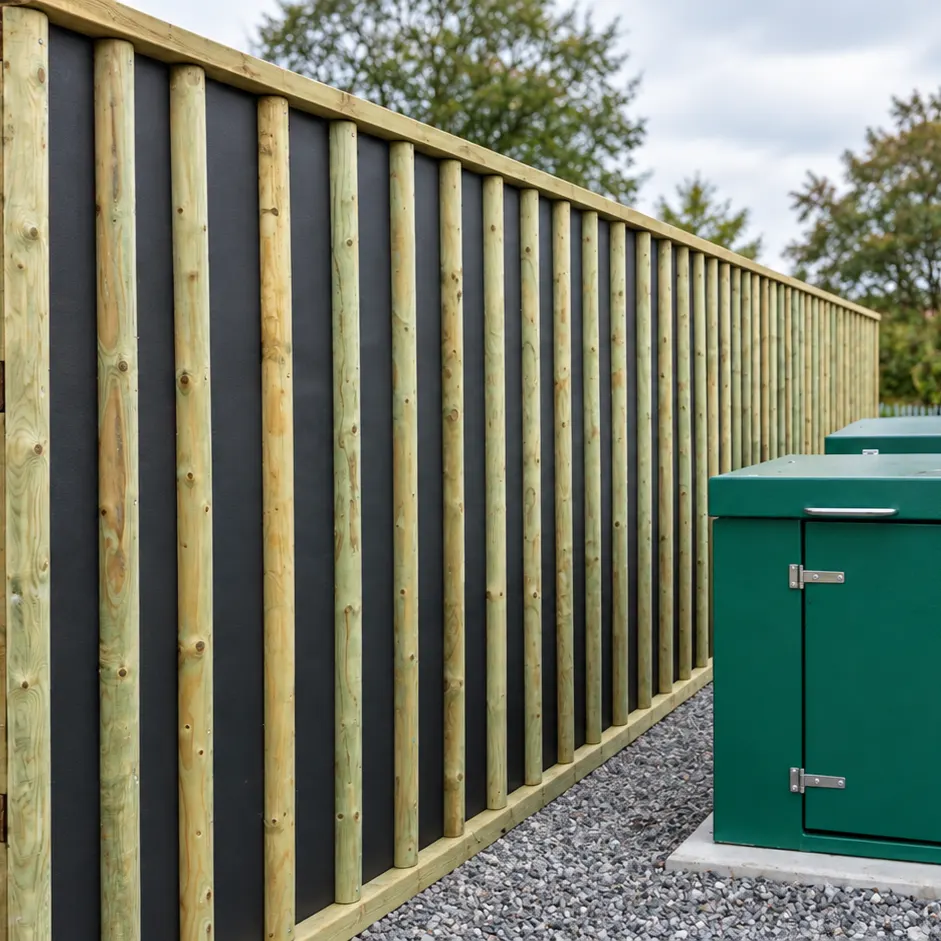
Acoustic fencing is a specialized, high-density barrier engineered to attenuate and reduce the transmission of outdoor noise. It is widely used to buffer sound from highways, railways, industrial sites, and commercial venues, as well as nearby residential sources.
Standard domestic wooden fences typically weigh around 4 kg/m² and often contain gaps or thin panels that allow sound waves to pass straight through. In contrast, high-performance acoustic fencing utilizes dense, airtight designs with a surface mass ranging from 10 kg/m² to over 25 kg/m² – effectively blocking, absorbing, or reflecting sound energy.
How Acoustic Fencing Works
While conventional fencing offers basic privacy, it does little to stop sound energy. Engineered acoustic barriers achieve substantial noise reduction through four core design principles:
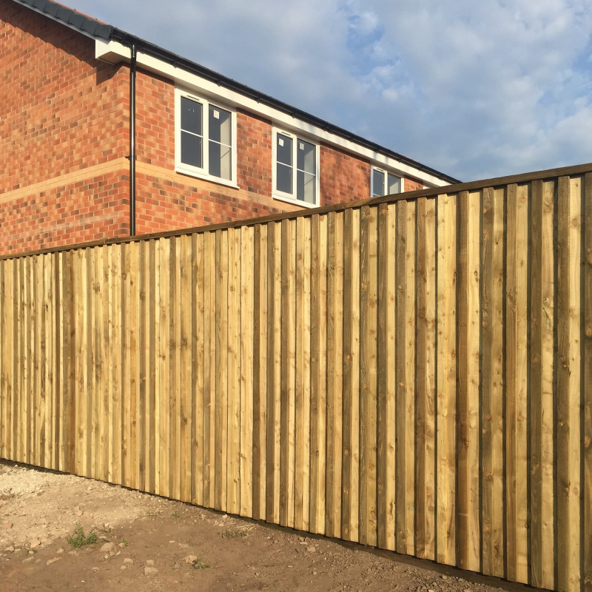
- High Mass and Density: Constructed from heavy, solid timber boards (such as 34mm thick profiles) to minimize acoustic vibration through the barrier.
- Airtight Interlocking Seals: Features deep tongue-and-groove or V-shaped profiles that interlock tightly, preventing noise leakage through panel joints.
- Elimination of Gaps: Installed flush to the ground with specialized gravel boards and airtight post seals to stop sound escaping around the perimeter.
- Increased Height: Forces sound waves to travel over a longer path, diffusing acoustic energy before it reaches the target area.
Types of Acoustic Barriers
Depending on the site environment and acoustic goals, noise barriers fall into two primary technical classifications:
- Reflective Acoustic Fencing: Features a solid, hard surface engineered to bounce sound waves back toward the source. Ideal for residential back gardens, boundary walls, and wide-open areas.
- Absorptive Acoustic Fencing: Combines a structural timber facing with a sound-absorbing core (such as high-density mineral wool). Designed for narrow corridors, highways, and enclosed spaces to prevent sound from echoing back and forth.
Expected Performance & Lifespan
While outdoor barriers cannot completely eliminate sound, MCW Acoustic Supplies fencing systems are rigorously tested and fully compliant with BS EN 1794-1 and BS EN 1794-2. Furthermore, our acoustic barriers comply with Highways Sector Scheme 2C for the prefabrication of environmental barriers.
As one of the UK’s leading noise barrier specialists, we proudly offer a 30-year desired service life on our acoustic fencing range. Subject to correct installation, our products deliver maintenance-free, long-term acoustic performance.